

One Year, Many Lessons
Every entrepreneur fails. Most never talk about it. This one wrote it all down: the chaos, the breakthroughs, the exits, and the lessons that actually stick.
110 Pages. Zero Sugar-Coating.
Every Lesson Earned the Hard Way.
A startup story that doesn’t make failure look glamorous. It makes it look honest. And that’s exactly why it hits.
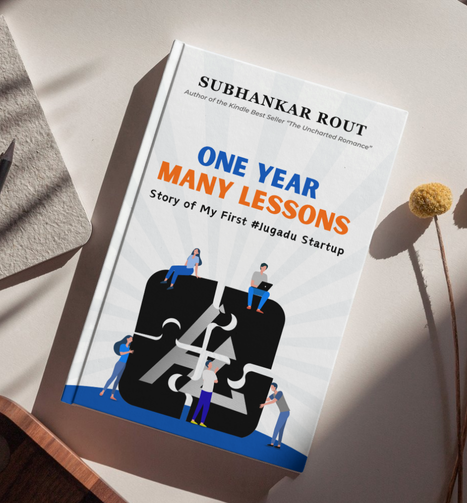
Here’s what most startup books won’t tell you: the most valuable lessons come from the startups that didn’t make it.
Subhankar Rout was a college student with no funding, no roadmap, and an idea that most people around him quietly dismissed. What he had instead was #Jugadu spirit, that distinctly Indian knack for resourcefulness that turns nothing into something. So he built HonourCreators, a B2B digital-services startup, from scratch, alongside a team of fellow students who believed the same stubborn thing: that starting beats waiting.
What followed was twelve months of pitching, building, failing, regrouping, and learning. The team grew. The challenges multiplied. The exits happened. And through it all, Subhankar kept a record, not of the triumphs, but of every decision, every mistake, every moment that taught him something the classroom never could.
“One Year, Many Lessons” is not a success story in the conventional sense. It’s better. It’s the story of what happens after the idea meets reality, and why the people who come out the other side of that are always the ones worth listening to.
| Author | Subhankar Rout |
| Language | English |
| Paperback | 110 Pages |
| ISBN | 978-93-340-7319-5 |
| Reading Age | 15 years and up |
| Dimensions | 8.5" × 5.5" |
| Country of Origin | India |
| Net Quantity | 1 Piece |
| Availability | Worldwide — Paperback via Amazon & Flipkart (India, free delivery), with Amazon shipping the paperback internationally. eBook available globally on Kindle, Apple Books & Google Play (Hindi edition on Play Books). |
Three Things This Book Will
Make You Rethink.
Most startup books are written after the win. This one was written from the middle of the storm. That makes all the difference.
Failure Is the Real Curriculum
Nobody puts “startup failed” on their CV. But every founder who ever built something real has a version of this story. This book is that story, unedited. The pitches that went nowhere. The decisions that cost time and trust. The moments when walking away was the only move left. You don’t learn this in a classroom. You learn it here.
The #Jugadu Way
No VC funding. No incubator. No safety net. Just a team of college students with an internet connection, a stubbornly good idea, and the Indian instinct for figuring it out anyway. This book celebrates what happens when resourcefulness meets ambition, and what it costs when reality pushes back. That tension is where the real lessons live.
Exits Are Not Endings
The startup ended. The learning didn’t. That’s the part this book gets right that most others miss. Stepping away from something you built is not the same as giving up. The difference matters enormously for anyone who plans to build again. This book is for the ones who will build again.
The Reviews Nobody
Expected to Write.
People picked this up expecting a startup book. They put it down feeling like someone finally described their own journey. Here’s what they said.
“I’ve read a dozen entrepreneurship books and most of them feel like victory laps. This one doesn’t. It reads like a conversation with someone who actually went through it and isn’t trying to impress you. The chapter on team dynamics alone was worth the entire purchase. I’ve already recommended it to three people in my startup cohort.”
The honesty in this book is what sets it apart. Most founders only share the version of the story where they look good. Subhankar shares the version where he learned something. That’s rare. That’s useful.
I’m a second-year student thinking about starting something. This book didn’t scare me away from it. It gave me a more honest picture of what I’m actually walking into. That matters more than any motivational speech.
110 pages. I finished it in one evening and went back the next day to underline things I’d missed. The part about knowing when to exit hit harder than I expected, because I’ve been there and didn’t have language for it until now.
I kept waiting for it to wrap up with a neat ‘here’s what I learned’ bow. It never did. The lessons are woven into the story itself, which is much harder to write and much more useful to read. Quietly impressive.
You can tell this is a real story and not a constructed narrative. The awkward moments are still there, the uncertainty is still there. That authenticity is exactly what makes it worth reading if you’re building or thinking of building.
My favourite kind of book: short, sharp, and honest. No fluff, no borrowed wisdom from other authors, no TED-talk phrasing. Just one person’s real year. I’d recommend it to anyone who thinks they want to be an entrepreneur.
Finished it?
Tell us what it changed for you.
Your review, honest and unfiltered, could be the reason an aspiring entrepreneur picks this up before their first big mistake. The author reads every single one personally.